
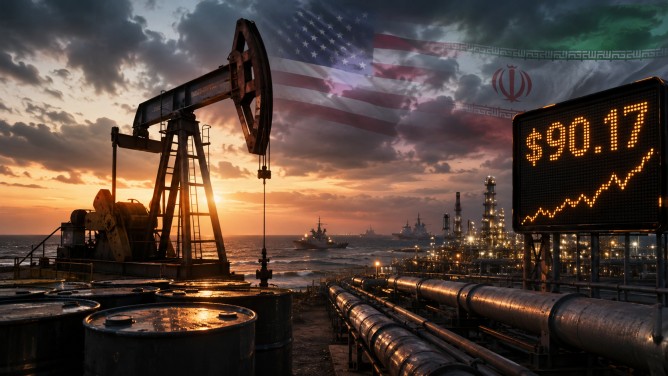
Oil prices have surged significantly following the lapse of a two-month negotiation period between the United States and Iran, which ended without reaching a peace agreement. This development has amplified concerns over the continuation of the conflict and its potential impact on global energy supplies. Brent crude prices soared past the $90 mark, hitting approximately $91.63 per barrel, the highest level observed since July 30.
The increase in oil prices was further fueled by U.S. President Donald Trump’s firm stance, demanding Iran’s surrender and warning of potential escalation if diplomatic channels fail to yield results. The situation has cast a spotlight on the Strait of Hormuz, a vital artery for global oil shipping. A notable decline in commercial vessel traffic through this route has exacerbated fears of extended disruptions to oil flows.
Iran has signaled the possibility of adopting a more assertive military approach should negotiations collapse, a prospect that has raised alarms about the security of maritime activities in the region. The reported attack on a cargo vessel navigating the strait has intensified these concerns, prompting a cautious response from stakeholders in the shipping industry.
Investors are now bracing for a potential protracted disruption to oil supplies. Any sustained closure or reduction of traffic through the Strait of Hormuz is expected to exert additional upward pressure on crude oil prices. The ongoing tensions in the Middle East, compounded by the conflict in Ukraine, present the risk of further destabilizing global energy markets, with analysts warning of potential spikes in oil and gas prices.
