
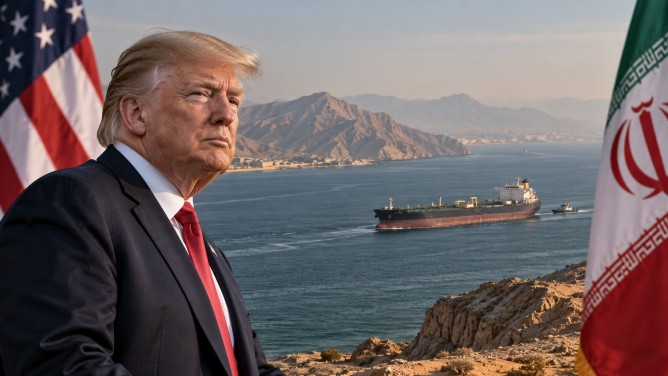
President Donald Trump has stated that despite rejecting a recent proposal from Iran regarding the reopening of the Strait of Hormuz, he anticipates new negotiations with Tehran in the coming days. This development follows indirect discussions between the two nations, mediated by intermediaries, during the United Nations General Assembly in New York.
The proposal from Iranian Foreign Minister Abbas Araghchi involved a seven-day plan to reopen the strategic Strait of Hormuz, contingent on the fulfillment of specific conditions. These conditions reportedly included lifting the U.S. naval blockade, easing sanctions, and releasing frozen Iranian assets. The plan, communicated through Qatar, also aimed to resume talks on Iran’s nuclear program. However, Trump and U.S. officials dismissed the proposal, expressing concerns over the preconditions set by Iran before any negotiations could take place.
Despite the rejection of Iran’s initial terms, Trump has indicated that U.S. representatives are expected to engage in further diplomatic efforts with Iran. These talks may cover a range of topics, including the status of the Strait of Hormuz, sanctions, nuclear issues, and broader strategies to reduce tensions between the two nations.
The Strait of Hormuz is a critical point of interest in the ongoing dispute due to its significance for global energy shipments. Any agreement to restore normal maritime traffic through the strait could have far-reaching implications for regional stability and international energy markets.
The outcome of these potential negotiations remains uncertain, but the willingness of both parties to engage in dialogue suggests a mutual interest in finding a resolution to the ongoing tensions. The international community will be closely monitoring these developments, given the strategic importance of the issues at stake.
