
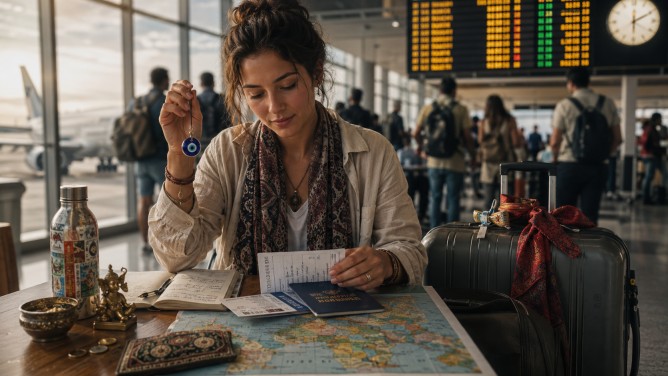
Travel often comes with its own set of customs and practices that add a touch of uniqueness to the experience. Across various cultures, people have embraced an array of superstitions intended to bring good fortune and safeguard against misfortune during their journeys. Here are seven intriguing travel superstitions that continue to hold sway in different parts of the world.
In the Balkans, carrying a clove of garlic in one’s luggage is a customary practice believed to ward off negative energy and the evil eye. Travelers hope that this tradition will protect them from bad luck. Another widespread practice involves touching the aircraft’s exterior before boarding. This gesture, which many believe brings good luck, serves as a comforting ritual, especially for those anxious about flying. Additionally, some travelers adhere to the belief that stepping onto a plane with the right foot first ensures a positive beginning to their journey, symbolizing a welcome to good fortune.
Water holds symbolic significance in certain cultures in the Middle East and the Balkans, where families may pour or sprinkle it behind a departing traveler. This act is intended to ensure a smooth and safe trip, with the hope of a safe return. Numbers, too, play a role in travel superstitions. While the number 13 is often avoided in Western countries due to its association with bad luck, the number 4 is similarly shunned in China because its pronunciation is akin to the word for death. Meanwhile, in Italy, the number 17 has traditionally been seen as unlucky, influencing choices in hotel room numbers and building floors.
In Slavic tradition, sitting quietly on one’s packed luggage before departure is a common practice. This brief pause is thought to provide an opportunity for travelers to collect their thoughts and mentally prepare for the journey ahead. Conversely, sweeping the floor immediately after someone leaves is considered unlucky in several cultures. The act of sweeping is believed to potentially disrupt the traveler’s good fortune or hinder their safe return.
While these travel customs lack scientific validation, they remain a fascinating aspect of travel culture. For many, these rituals are not just about whether superstitions have any real power but are more about maintaining family traditions, cultural roots, and the excitement that accompanies the start of a new adventure.
