
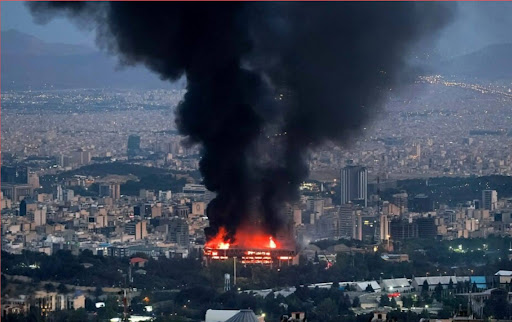
Kharg Island, the small landmass off Iran’s southwestern coast that serves as the country’s main oil export terminal, became the most strategically important piece of real estate in the world on Saturday as US warplanes bombed it for the second consecutive day. President Trump said in public statements the island had been effectively demolished, though he left open the possibility of further strikes. The island’s significance lay not just in its role in Iran’s economy but in what its destruction would mean for global oil markets already destabilised by the war.
The Strait of Hormuz, through which roughly 20 percent of global oil and gas passes, had been closed by Iran since the conflict began on February 28. With the strait blocked and Kharg Island under assault, two of the most important nodes in the global energy supply chain were simultaneously under threat. Energy analysts had warned that oil prices already near $120 per barrel could climb to $150 if Kharg’s export capacity were fully eliminated — a level that would inflict serious damage on economies around the world.
Trump simultaneously threatened to destroy Iran’s remaining oil infrastructure if Tehran continued blocking the strait, while calling on allied nations to send warships to force the passage open. He named China, France, Japan, South Korea, and the UK as countries whose naval contributions he wanted to see. Analysts described this as the first clear public admission that the US might not be able to reopen the waterway unilaterally. The deployment of the USS Tripoli and 2,500 additional marines was adding military muscle to the US position in the region.
Iran’s response on Saturday was to widen the front rather than seek a way out. Ballistic missiles struck Fujairah in the UAE, suspending oil-loading operations and threatening yet another node in the global energy system. Iranian commanders threatened to strike any Gulf energy facility with American ties, and the foreign minister demanded Arab states expel US forces. Israel conducted dozens of airstrikes inside Iran, killing at least 15 people in Isfahan. Iran continued firing rockets at Israel simultaneously.
The war’s human and economic costs were growing by the day. More than 1,400 Iranians had reportedly been killed in sustained bombing. Thirteen Israelis and roughly 20 Gulf residents had also died. Lebanon’s crisis continued with 800 killed and 850,000 displaced from Israeli strikes on Hezbollah. Six US troops died in an aircraft crash in Iraq. The US embassy in Baghdad was struck overnight, and Americans were ordered to leave. Trump refused to provide a timeline for ending the conflict, leaving markets and governments worldwide bracing for a potentially prolonged and economically devastating war.